


By Garrett Delk, Pickering Energy Partners
The views expressed by the author are their own and do not represent the views of Energy Workforce & Technology Council.

As of 2023, the U.S. was the largest exporter of liquified natural gas (LNG) globally. This places U.S. producers at the epicenter of a growing demand curve that is firmly set to grow over the coming decades, with consumption coming from markets across the Pacific and Atlantic. Asia and Europe are the biggest demand drivers of U.S. LNG, with buying catalyzed by the confluence of energy security and emissions efficiency – said simply, LNG is cheap, relatively easy to secure and cleaner to burn than coal.
While at the same time presenting a strong tailwind for U.S. producers, this trend is also driving a rapidly forming methane reporting regime that private and public U.S. energy companies need to be aware of to fully capture the coming opportunity. In reviewing each, corporates will be both better equipped to sift through the noise and able to anticipate the data needed to realize the growth potential.
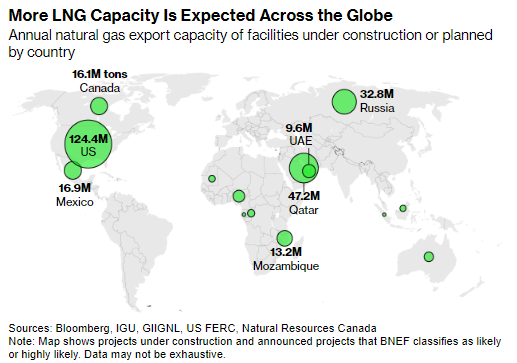
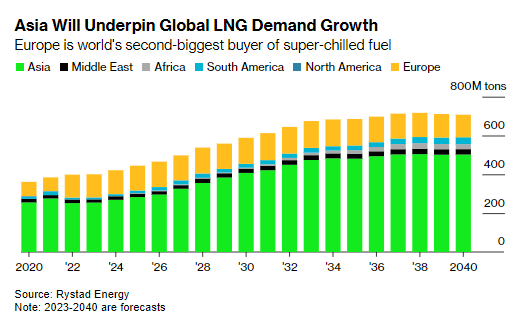
Source: Bloomberg, A $290 Billion Investment Cements Natural Gas’s Relevance for Decades
Asia
· Over 20 Japanese and South Korean companies, including major LNG buyers like JERA, Tokyo Gas, and Korea Gas, will collaborate in the CLEAN initiative to reduce methane emissions from gas fields, a key contributor to global warming.
· These companies handle approximately 100 million tonnes of LNG annually and will encourage LNG producers to disclose methane emissions data, aiming to influence major gas-producing regions like the Middle East and Southeast Asia.
· The initiative, supported by the U.S., Australia, and the European Commission, will improve methane data transparency and offer technologies like infrared cameras for leak detection, with data contributing to climate efforts and helping institutional investors prioritize sustainability
· Crucially, verification and quantification of methane data is becoming table stakes for selling into large markets across the globe
Europe
· EU Implements Methane Emissions Regulations for Fossil Fuel Imports: In June 2024, the EU finalized regulations requiring fossil fuel importers, especially LNG providers, to monitor, quantify, verify, and reduce methane emissions, aligning import standards with those of EU producers.
· Phased Reporting and Compliance Requirements: Starting in 2025, EU importers must report annual methane emissions data from exporting countries and companies, including their measurement and reduction procedures. Beginning January 2027, new import contracts are allowed only if exporters apply the same monitoring, reporting, and verification (MRV) obligations as within the EU.
· Stricter Standards by 2028 and 2030: By January 2028, importers must report on the methane intensity of imported oil, gas, and coal using EU-specified methodologies. By January 2030, they must demonstrate that the methane intensity of these imports is below specific maximum values to be set by the EU in forthcoming legislation.
As always If you have any questions on execution of a methane mitigation plan or methane monitoring technologies, please do not hesitate to contact the team at Pickering Energy Partners.
Energy Workforce partner Pickering Energy Partners provides insights on ESG due diligence, disclosures and reporting. Garrett Delk is Associate, Consulting & Advocacy.
