


From exploration and drilling to midstream infrastructure, refining and emerging technologies, each part of the energy value chain is interconnected.
Energy Workforce & Technology Council’s Oil & Gas 101 seminar, facilitated by the Emerging Executives Committee, is designed to bring the full picture into focus. The two-day seminar provides a comprehensive overview of the energy value chain, helping participants better understand upstream, midstream and downstream operations and the role each plays across the industry.
Take a look back at last year’s seminar for a sneak peek at what to expect this year. ⬇️
Setting the Stage: Industry, Markets & History
EWTC President Molly Determan opened the morning with an overview of the industry, walking participants through key industry definitions, the players that make up the energy value chain and how capital flows across the sector.
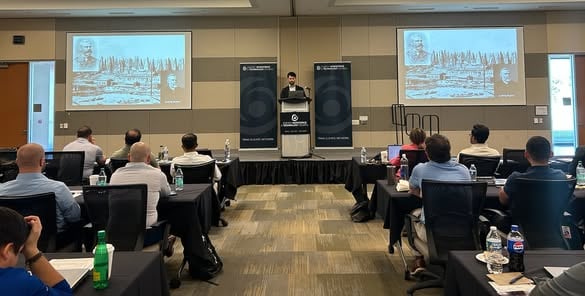
Daniel Meyer, Accenture, shared a market overview: oil prices pressured by slowing demand and rising supply, continued upstream investment, strong downstream margins, and growing North American LNG activity. He also highlighted AI’s role in boosting efficiency and the ongoing need for workforce reskilling and talent retention.
Representing the Emerging Executives Committee, Andrew Kuchta, Forum Energy Technologies, traced the History of the Oilfield, from the first wells in Azerbaijan to Spindletop’s boom in Texas, the rise of offshore drilling, and the industry’s push for safety and continuous improvement.
As the sector continues to evolve, understanding how every piece fits together is key to driving innovation, efficiency, and long-term growth.
Exploring the Technical Side of Energy Production
The afternoon session of Oil & Gas 101 dove into the technical side of exploration and drilling, giving participants a firsthand look at the science and engineering behind energy production.
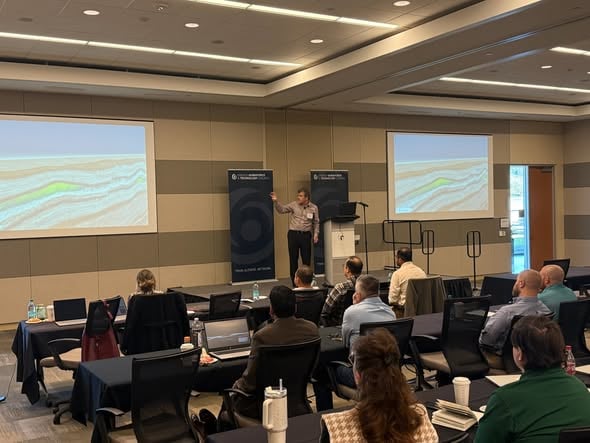
Andrew Royle, Suriname–Guyana Exploration Technical Lead, Chevron, walked attendees through the fundamentals of geology and seismic technology, from early exploration methods and the role of plate tectonics to the evolution of 2D and 3D seismic imaging that drives modern discovery.
Karl Appleton, NOV, broke down rig systems and drilling operations, highlighting how operators, drilling contractors, and service companies work together to safely and efficiently bring wells online.
Michael Dardis, SLB, closed with insights on completions and flow equipment, showcasing innovations in digital technology, emissions reduction, and drilling efficiency that are shaping the industry’s future.
The day wrapped up with a deep appreciation for the innovation, skill, and collaboration that power every stage of oil and gas production.
Technology, Infrastructure & Power
Day 2 of Oil & Gas 101 kicked off the morning by exploring the technology, infrastructure, and power systems driving today’s energy industry.
Taylor Chapman, New Climate Ventures, opened with insights on AI, data centers, and power demand, outlining how the surge in digital activity is reshaping electricity consumption and capital investment. He shared projections of global and U.S. data center power use, highlighting that while AI valuations may fluctuate, AI-driven infrastructure growth is only accelerating.
Darin Bohlmann, Caterpillar Inc., examined energy sources that power the oilfield, comparing internal combustion engines, turbines, and utility systems. He discussed emissions regulations, fuel costs, and future trends as the industry meets growing power and sustainability demands.
Mike Robinson, TechnipFMC, closed the morning with subsea infrastructure, explaining how design, weather, and reliability drive successful offshore operations, from subsea trees and flowlines to field development and installation.
The morning underscored the innovation and expertise required to power progress both onshore and offshore.
Following the Energy Value Chain
Oil & Gas 101 wrapped up with a deep dive into the systems and strategies that keep the industry moving forward.
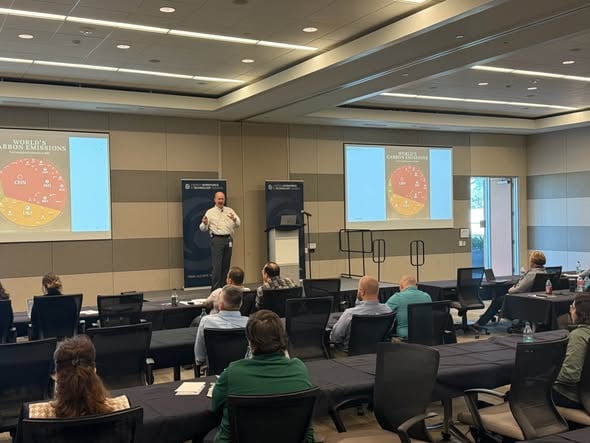
Perrin Boone, Williams covered the midstream sector, emphasizing natural gas’s critical role in meeting rising energy and data center demand while reducing emissions through coal-to-gas switching.
Chris Gallo, Phillips 66, took participants inside refining, explaining how crude selection, processing, and logistics transform raw resources into the fuels that power everyday life.
Ryan Carr, Kodiak Gas Services, explored the energy supply chain, focusing on safety, efficiency, and sustainability in managing complex operations across the value chain.
Chuck Chauviere, HMH wrapped up the day with energy expansion, discussing global energy trends, hydrogen growth, renewables, and the need for advocacy to ensure reliable, affordable power for the future.
Experience Oil & Gas 101 This October
This year, Oil & Gas 101 returns October 7–8 at HMH in Houston, once again bringing together industry experts to provide participants with a comprehensive look at the energy value chain.
Britney Turcios, Marketing Specialist, writes about the Energy Workforce & Technology Council. Click here to subscribe to the Energy Workforce newsletter, which highlights sector-specific issues, best practices, activities and more.
